Showing posts with label book review. Show all posts

Saturday, 19 June 2021

Book Review - Britain's Insects Wildguides

 Visitors to my blog will have noticed that many of my recent posts feature insects rather than birds. Like many other birders, I’ve developed a passion for selected insect families and am now broadening my horizons even further, seeing new insects, virtually every time I’m in the field. Whatever your level of interest, a good field guide is essential.  This will help to expand your knowledge and steer you to a successful and accurate identification of the ‘unknown’ species you are agonising over!

If you are in the market for a book that gives you the ability to identify insect species purely from visual observation or photographs in the field, I have some great news, a new title in the ‘Wildguides’ series entitled ‘Britain's Insects’, is now available!


Written by well-known expert and prolific author Paul D Brock, the Wildguides ‘mission’ of ensuring up to date content plus the best images from top photographers has combined to produce a masterpiece field guide ‘tome’. It is probably at the limit for a single softback volume too, weighing in at around 1.5kg, packed with 1653 insect species amongst the 608 pages. The photographs are larger than previous photo-guides on the subject and clearly chosen at angles to best demonstrate the key identification features of the species concerned.  A simplified description of the insect orders will help to narrow down which family an unknown insect belongs to by referring to common representatives. A little time spent here may save the beginner from simply leafing aimlessly through the whole book!


A glossary of technical terms is included which concentrates on those in frequent general use. Terms which are specific to a particular order are included in an annotated image at the beginning of a particular section. A brief section of watching and photographing insects together with some snippets of their behaviour takes the reader up to the species accounts. The text caters admirably for the beginner, using English names for every insect included plus the scientific name for each order, family, genus and species. The standard template of information for each species (page 33) is worth digesting before you read on, there is so much important coded information here. For each insect, measurements and key identification features are noted plus similar species (where relevant) to help the beginner avoid pitfalls. The likely habitat and specific foodplants will help you look in the right places plus a distribution map details where records currently exist. The phenology chart should help the user to search for a particular insect at the correct time.


The accounts vary in their coverage of the orders, including every species in some orders eg Odonata (Dragonflies and Damselflies) 27 pages, Orthoptera (Crickets and Grasshoppers) 30 pages and Lepidoptera (Butterflies but not all Moths) 83 pages. These are obviously some of the most showy and popular of our insects and likely to enthuse interest in other orders through chance encounters whilst in the field. A useful list of further reading where appropriate accompanies the first page of each order. One of the two additional more specialised field guides mentioned will become essential reading to recognise some of the vast array of female / immature patterns which may bewilder the novice but become a prime focus for the keen observer.


The Orthoptera section features a QR code for most of the UK Crickets and Grasshoppers. This code links to a sound recording of the species of interest, an app will be needed on your phone to read this. Close up images of the pronotum shape and structure help ease the observer into Grasshopper identification, all species are annotated with the key identification features.

Many families are prefaced with a table containing a descriptive identification key (example below). These will help give an understanding of the aspects and angles needed for photography to enable an identification to species level rather than identifying as simply or Mason Wasp’ for example. 


The final 30 pages are devoted to conservation status and legislation, further reading and useful websites / online resources and insect societies. The index allows for searches using either common or scientific name and is well laid out. The rear cover flap features a useful alphabetical index to Orders as well, following the same nomenclature.

Published by Princeton University Press on 8th June 2021, the target price of £25.00 can currently be found as low as £18.31 at selected outlets online.

This is my second ‘Insect’ field guide written by Paul Brook and in case anyone is hesitating to add another book to their collection, I have to say they complement each other rather well! Apart from simply helping to identify insects, there is so much background information in the species accounts and elsewhere, it makes for good reading. The clear images are exemplary and unmatched at present. It is a ‘must have’ for everyone with a general interest in insects and I’m sure it will sneak into the libraries of quite a few seasoned experts too!

Wednesday, 16 December 2020

Book Review - Britain's Day-Flying Moths 'WILDGuides'

The final instalment of WildGuides book reviews for 2020 could be tailor made for me? My passion for birds has already taken second place during the summer months in recent years with Lepidoptera and Odonata occupying a lot of interest. Moths have gradually appeared on the radar over the years but I have resisted temptation to go down the moth trap route due to lack of time. My interest in them has been opportunistic, photographing the few Hawk-moth or day flying species which have come my way in recent years. I’ve lost count of how many times I’ve tried to ‘freeze’ a Hummingbird Hawk-moth image! Achieving this and photographing my first Emperor Moths were two of the highlights of 2019.


The 2nd edition of ‘Britain’s Day Flying Moths’, written by David Newland, Robert Still and Andy Swash was published by WILDGuides in 2019. This new edition brings in several new species, updates information / design and features positive changes as suggested by reviewers of the 1st edition. Of the 2,500 moth species recorded in Britain and Ireland, this book includes 158 species which routinely fly during the day plus 29 additional but relevant species. The tried and tested WILDGuides style is evident and makes for intuitive reading. The first issue the book attempts to resolve is a definition of the title, what is a day flying moth? Some moths (e.g Cinnabar, Burnet and Silver Y) are obvious day fliers whilst others are easily disturbed in their habitat and often seen in flight. 

The first 15 pages cover Moth biology, life cycle, naming, identification and then defines day flying moth groups based on their family noting their key distinguishing features. For example, how the moth holds its wings at rest or colouration helps with assigning to a particular group although some groups only contain a single species. There are 60 Geometrids and 23 Micro-moths, both sections which are likely to be amongst the most thumbed pages?


Examples of where to look for day flying moths are displayed in a photo gallery and eight habitat categories are defined. Over forty of the species included in the book can be seen in gardens or parkland and the ‘gardening for moths’ section details many of the key plants which will attract moths to your garden including larval foodplants.

A glossary heralds the start of the species accounts which cover 183 pages, accounting for the majority of the 232 pages. Species are covered in taxonomic order only deviating where similar species are quite sensibly presented on facing pages. Each species has a full page and English names take precedence and are referred to in the text, although scientific names are noted for each species header. A standardised box details the conservation status in Britain and Ireland, where found, when flying, size, larval foodplant and a reference to similar species.  The description details the key characteristics, behaviour and lifecycle, including usual or interesting details. For most species, information is given regarding the larva which can be quite varied in themselves! At least one superb photograph of the moth in its natural resting pose accompanies the text, (see examples below).


I didn’t realise there were seven Burnet species, only three of which are common but distinguishing them, especially the rarities can be difficult! The differences are all small and some are Scottish specialities which will be a challenge to find and identify.


For each moth group, a two-page general introduction is given which includes the key characteristics of the species it includes. The Hawk-moth section is one of the shorter ones, including Hummingbird Hawk-moth and two species of Bee Hawk-moth but also illustrates several more of our most impressive moths even though they aren’t generally seen as day fliers. They may be found resting in gardens where I have found two species myself, so their inclusion for me is justified and completes an overview of the group. 


23 species of micro-moths are covered, there are so many more but those included demonstrate the tremendous diversity amongst this group which numbers over 1,600! From the Plumes (Brown and White), Yellow Conch and Small Magpie there are plenty of appealing species to behold plus the less welcome Common Clothes Moth. I don’t think I ever saw one as a youngster but I well remember the smell of ‘moth balls’ and curious holes appearing in woollen garments, the unwanted legacy of their presence in the house!


The final group includes two recent introductions which are also pests: the Box Moth and Oak Processionary. These are expanding their range from the south east and could become a serious nationwide threat to their larval foodplants, which suffer rapid defoliation and damage.

To help ‘list-minded’ folk like myself, a summary list of day flying species (p 210-217) is included noting the likely habitat, flight season (whether found nationwide, north or south), main larval foodplant and conservation status. I have seen many more day flying moths than I already have images for and need to take a bit more notice of them whilst out recording Odonata, Lepidoptera and Orthoptera! Hmm, this list of insects is expanding somewhat but I am now motivated to find out more via the final pages of the book which adequately cover recording / monitoring, conservation and ‘further reading’ / useful websites.

I am sure this book will be invaluable to all those that wish to know more about these moths and as an introduction to moths generally comes highly recommended as a must have on the bookshelf or in a backpack! There is one caveat, do not expect every moth you flush in daylight to be included in the book, you may need to resort to a full ‘search’ elsewhere for a positive identification. Be assured, they will be in the minority and my one and only example of this during the past year was Dingy Footman…

PS Here's the Hummingbird Hawk-moth. I'll upload a Day-flying moth post soon...


Thursday, 15 October 2020

Book Review - Britain's Butterflies 4th ed. 'WILDGuides'

Autumn may not be the ideal time to publish a Butterfly book but delayed by COVID-19, the 4th edition of WILDguides Britain's Butterflies is now available and it's a must have!

A lifelong interest in Butterflies began for me in the 1960’s when as a young budding naturalist ‘The Observers Book of Butterflies’ became a source of wonder and inspiration. Fast forward another forty years to the millennium and with the dawn of the digital age, I bought my first digital camera and needing a new reference book I bought the WILDGuides first edition of ‘Britain’s Butterflies. Using photographs, cleverly arranged on a montage of food plant flowers or habitat, this edition would still be adequate for the novice but times move on. The fourth edition of this ground-breaking book has now evolved into the benchmark for modern photographic field guides. The original duo: David Tomlinson and Robert Still, joined by David Newland and Andy Swash from the second edition have ensured the book keeps pace with modern taxonomy and uses the best available photographs. The foreword, written by Julie Williams CE of Butterfly Conservation, reminds us of their alarming decline around the world and the need to conserve them - hopefully their work will ensure that future generations, are inspired by butterflies too.

Right from the start, this book looks and feels well made with a soft yet durable cover (flexibound). Weighing in at 610g and measuring 8 ½ x 6”, it will easily slip into a backpack. There are over 600 high quality colour images and 76 colour distribution maps throughout the 256 pages which cover in detail, the identification of all 59 butterfly species that breed regularly in the UK in addition to former breeders and migrants. Written with an easy-going style, it will appeal to the beginner but is worthy of a place in the bookcase of the more advanced observer. The sections on food plants and on recording / monitoring have been expanded and the species order has been revised to reflect the latest taxonomy.

The introduction sets the scene for making butterfly identification as simple as possible then covers how butterflies and moths differ and their biology. The sections on ‘where to look for butterflies’ and their identification by ‘type’, separated into six families and then eleven broad groups (eg ‘Browns , ‘whites and yellows’, skippers etc) is a sensible approach for the beginner. A brief section on colour variation and aberration whets the appetite for more advanced identification. References to other books are included, which provide more depth of information. 


The bulk of the book deals with species accounts which are covered in an exemplary, consistent format and how appropriate that the first section commences with a favourite for many observers - the Swallowtail. 


Where this book excels, is the ease with which species can be found with each having a double page spread, information on the left and relevant images on the right.

The conservation status, legal protection status and measurements of each butterfly are followed by an up to date distribution map which colour codes the main breeding range, secondary breeding and for extinct species, the former location. The tried and tested ‘clock diagram’ uses another colour coded scheme to clearly denote when each life stage occurs, noting that in the north of the species range, this may be slightly later. Tips on where to look for the species plus possible confusion species followed by a concise summary of the species’ status in Britain and Ireland.

The colour plates are superb, males and females are distinguished where possible, sometimes with annotated close up images or including both upperwing and underwing shots when appropriate.   Some images of subspecies (eg Silver-studded Blue and Grayling) and forms (eg Comma) are included and a list of subspecies is included in the main national list (page 237 onwards). 


Former breeding species, rare migrants and vagrants occupy the next thirty pages, detailing their likely origins.  The very rare migrant, Scarce Tortoiseshell, is included in this section and is only ‘new’ species addition since the first edition. There was an exciting record of sightings at different places in south-east England in 2014. Southern Small White gets a mention too, expanding its range rapidly in Europe and recorded near Calais in 2019. Some records of either may of doubtful provenance but who knows whether these small advance parties could one day become UK colonists?


 A section on food plants, details the associations, sometimes unique, of caterpillar species with a particular flower or tree. The food requirements of the adult butterfly may differ from that of the caterpillar as the priority is finding good sources of nectar. Searching for the correct food plant may help the observer find the target butterfly? The early life stages of butterflies are covered next with close up images of the eggs, caterpillars and chrysalises, noting when and where you might find them.

The concluding section features a complete list of British (and Irish) butterflies, tips on butterfly watching and photography, butterfly conservation plus recording and monitoring. Having found your butterfly and photographed it, the online presence of butterfly conservation and regional groups ensure images can be enjoyed by a wider audience and these act as ‘news’ of emergence and productive sites.

Published by Princeton University Press on 14th September 2020, the target price of £17.99 can currently be found as low as £13.40 at various outlets. Be sure you are buying the correct edition, with a picture of the Comma on the cover!

This field guide is an absolute ‘must have’ for anyone contemplating a wish to identify and learn more about butterflies. Whether simply observing butterflies in the garden, the countryside, local nature reserves or whilst on holiday, it contains all the information you need when in the field to identify your ‘finds’. For the price, this fourth edition is a snip and will bring you right up to date! Happy hunting next spring…


Thursday, 11 June 2020

Book review - Britain's Insects WILDGuides

Visitors to my blog will have noticed that many of my recent posts feature insects rather than birds. Like many other birders, I’ve developed a passion for selected insect families and am now broadening my horizons even further, seeing new insects, virtually every time I’m in the field. Whatever your level of interest, a good field guide is essential.  This will help to expand your knowledge and steer you to a successful and accurate identification of the ‘unknown’ species you are agonising over!

If you are in the market for a book that gives you the ability to identify insect species purely from visual observation or photographs in the field, I have some great news, a new title in the ‘Wildguides’ series entitled ‘Britain's Insects’, is now available!


Written by well-known expert and prolific author Paul D Brock, the Wildguides ‘mission’ of ensuring up to date content plus the best images from top photographers has combined to produce a masterpiece field guide ‘tome’. It is probably at the limit for a single softback volume too, weighing in at around 1.5kg, packed with 1653 insect species amongst the 608 pages. The photographs are larger than previous photo-guides on the subject and clearly chosen at angles to best demonstrate the key identification features of the species concerned.  A simplified description of the insect orders will help to narrow down which family an unknown insect belongs to by referring to common representatives. A little time spent here may save the beginner from simply leafing aimlessly through the whole book!


A glossary of technical terms is included which concentrates on those in frequent general use. Terms which are specific to a particular order are included in an annotated image at the beginning of a particular section. A brief section of watching and photographing insects together with some snippets of their behaviour takes the reader up to the species accounts. The text caters admirably for the beginner, using English names for every insect included plus the scientific name for each order, family, genus and species. The standard template of information for each species (page 33) is worth digesting before you read on, there is so much important coded information here. For each insect, measurements and key identification features are noted plus similar species (where relevant) to help the beginner avoid pitfalls. The likely habitat and specific foodplants will help you look in the right places plus a distribution map details where records currently exist. The phenology chart should help the user to search for a particular insect at the correct time.


The accounts vary in their coverage of the orders, including every species in some orders eg Odonata (Dragonflies and Damselflies) 27 pages, Orthoptera (Crickets and Grasshoppers) 30 pages and Lepidoptera (Butterflies but not all Moths) 83 pages. These are obviously some of the most showy and popular of our insects and likely to enthuse interest in other orders through chance encounters whilst in the field. A useful list of further reading where appropriate accompanies the first page of each order. One of the two additional more specialised field guides mentioned will become essential reading to recognise some of the vast array of female / immature patterns which may bewilder the novice but become a prime focus for the keen observer.


The Orthoptera section features a QR code for most of the UK Crickets and Grasshoppers. This code links to a sound recording of the species of interest, an app will be needed on your phone to read this. Close up images of the pronotum shape and structure help ease the observer into Grasshopper identification, all species are annotated with the key identification features.

Many families are prefaced with a table containing a descriptive identification key (two examples below). These will help give an understanding of the aspects and angles needed for photography to enable an identification to species level rather than identifying as simply ‘Cuckoo Wasp’ or Mason Wasp’ for example. 


The final 30 pages are devoted to conservation status and legislation, further reading and useful websites / online resources and insect societies. The index allows for searches using either common or scientific name and is well laid out. The rear cover flap features a useful alphabetical index to Orders as well, following the same nomenclature.

Published by Princeton University Press on 8th June 2021, the target price of £25.00 can currently be found as low as £18.31 at selected outlets online.

This is my second ‘Insect’ field guide written by Paul Brook and in case anyone is hesitating to add another book to their collection, I have to say they complement each other rather well! Apart from simply helping to identify insects, there is so much background information in the species accounts and elsewhere, it makes for good reading. The clear images are exemplary and unmatched at present. It is a ‘must have’ for everyone with a general interest in insects and I’m sure it will sneak into the libraries of quite a few seasoned experts too!


Monday, 25 September 2017

Book Review - Britain's Spiders 'WILDguides'

My latest acquisition in the WILDGuides series, published by Princeton books is a must have for anyone interested in Britains Spiders. I have always strived to learn more about them after encountering interesting (usually showy) species, e.g.  Argiope bruenichii (Wasp Spider) and Dolomedes fimbriatus (Raft Spider). Easy going books on the subject are few and far between but this new book perfectly fills the niche for a 'photo guide' once occupied by the Dick Jones Hamlyn guide, now out of print. The target audience is from the keen novice (that's me!) to dedicated arachnophile.

As with others in the series, the book is roughly 8" x 6", comes in a very durable softcover, and with 480 pages, weighs in at 1025g so it's not exactly one for the pocket but will easily fit into a small backpack!  All 37 British Spider Families are featured, illustrated with more than 700 photographs. The authors concentrate on the species that can be identified in the field and include 395 of Britain's species. Considering there are approximately 670 species known in Britain, the hard core 'hand lens' species which belong to a more specialised realm are wisely not included here.


Go on, admit it - aren't you just dying to get the macro lens out to try and find, then photograph the  Jumping Spider (Evarcha arcuata) featured on the cover ? Bearing in mind this female is only 6-8mm long you get a feel for the quality of images in the book. Whilst most images are reproduced from 2 - 10x 'life size',  each are reproduced at the perfect size for the illustration of key identification features. The book concentrates on the basics throughout the early pages, taking a journey through spider anatomy and the glossary of terms used within the book. The spider families are briefly described, detailing their characteristics and key features A section on webs, compares the various types of structures created by our various spiders, concise notes then consider the architecture of the web, where they might be found and the species most likely to be associated with them. Armed with this basic information, the individual species accounts lie in wait to fully describe the species covered in this book. Over 300 pages are devoted to the species accounts, so for an unidentified species, it helps if you can narrow your search by pre-reading through the families and webs first.


Local nature lovers in Shropshire and arachnophiles elsewhere should not require any introduction to Dolomedes fimbriatus or Argiope bruennichi. They were my 'stepping stone' species to a wider interest in spiders. A couple of snapshots from the book (below) detail the  standard approach to each species which is mirrored in all the others. For each species, there are observation tips / habitat, a description pointing out similar or confusion species and the distribution / status. The map denotes the current range and a table below denotes the UK occurrence for males and females. This is derived from the BAS spider recording scheme and the darker the shading indicates those months with the highest number of observations. 


When confronted with a web containing both male and female Wasp Spiders, you immediately realise there is a huge difference in size between the sexes. In addition to this, the seasonal appearance may differ and the male Wasp Spiders may appear a month later than females..


Towards the back of the book, there is a complete list of all the spiders recorded in Britain which covers 35 pages and details the ease with which they can be identified. The book itself focuses on those species which can be identified in the field.

The authors: Lawrence Bee, Geoff Oxford and Helen Smith are to be commended for ensuring the book does not overwhelm the reader, yet is full of the science and biology of these fascinating creatures - produced in collaboration with the British Arachnological Society .

 I can't believe that anyone with an interest in nature would not find this to be the perfect book to have on the subject. From 'beginner' to serious spider observers, this is the benchmark field guide.

Published by Princeton the full details can be found here and there is also a link to page examples. The RRP is £24.95 (UK) but offers may be found elsewhere e.g Amazon.

Footnote: I had long wondered if this impressive 'beast' (below) taken on a small pool near Loch Garten in 2012 was truly Dolomedes fimbriatus. It has been identified as such by the gurus at the British Spiders Recording Scheme but illustrates the point, like many wild creatures, some spiders are quite variable in their appearance.  I have never seen another image, in a book or on the web depicting this species like this one!


Enjoy your journey with spiders! You will enjoy it even more and make faster progress, with this book to guide you!

Sunday, 30 April 2017

Book review - Cat Wars

'The devastating consequences of a cuddly killer'

Peter Marra and Chris Sartella have put together an eminently readable account of the impact cats have on wildlife both historically and up to the present day. Whilst it is written without sentiment or emotion it raised a storm in the USA which is unlikely to go away...


This book took me quite a long time to read but always held my attention and using a 'calm scientific' approach details the calamitous problems they have caused and continue to cause, largely unchecked. Whether you love them or hate them, if you care about nature and (with birds in the front line) I presume that's why you are here reading this, you should read it.

There are a lot of numbers involved, mostly big ones. Cats have evolved a relationship with man for the past 10,000 years. Much of the data is based on studies in the USA, where in Wisconsin, cats kill a minimum of 7.8 million birds each year. If you think that's alarming, the total killed within the USA annually is likely to be in the order of four billion. But don't be mislead, it's not just about facts and figures, it is a compelling read, charting their effects over the years and speculating where it will all end. Whilst other creatures like small mammals are affected, it's the birds which take centre stage but we are at risk too, as a chapter dealing with toxoplasmosis and rabies amongst other serious diseases, clearly points out.


We take cats for granted and whilst their activities often out of sight or mind don't hold our attention,  the content of this book should. It kicks off in 1894, when a lighthouse keeper landed on Stephens Island (off the coast of New Zealand) with his pet cat Tibbles. (Quotations at the start of every chapter, set the scene and are so appropriate.

Just over one year later, the Stephens Island Wren, a small flightless songbird endemic endemic to the island was rendered extinct. Just one cat (with her litter in utero) was responsible was responsible for the extinction of an entire bird species.

I don't want to reveal too much of the specifics within the book but it's clear that the rise of bird lovers and cat lovers provides a recipe for conflict and high emotions. Detailing the struggles from the perspective of either faction shows just how high emotions can run. Laws have been changed in the USA to protect cats, strategies proposed to 'lessen their impact', yet the problem isn't going away there. Eradication of cats on Ascension island was successfully achieved between 2002 -06 but at huge cost. Some success has been claimed in Australia and New Zealand for instance where measures to ensure the continued survival of endemic species manage to meet with public opinion.

It's not easy to sit on the proverbial fence and have no vested interest either way.  Who's to blame for the problem?  Lots of solutions and strategies are explored with predictable outcomes. Neutering cats has little effect on populations and the only successful way of dealing with the problem is to completely eliminate free roaming feral cats from the environment and require owners of domestic cats to keep them inside. As ever, the root cause of the problem is man. We brought them into our lives, some of us released them into the wild and we let our domestic pets roam free. Is there a solution? This book will arm you with the facts.. it will take a long time and effort by all concerned to find and agree to the answer...

Cat Wars: The devastating consequences of a cuddly killer by Peter P Marrra and Chris Santella published by Princeton University Press, New Jersey 2016.
228 pages, 24 colour photos, ISBN 9780691167411. Hardback typically £16.55

Thursday, 15 December 2016

Book Reviews - gift ideas :-)

Having done a few book reviews lately and with just over a week to go until Christmas, I was thinking... any one of these may be of use for a last minute Christmas pressie, even if it's to yourself?

Click on the image to open the full review in a new page.....


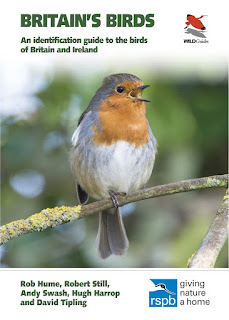
 Britains Birds


Monday, 7 November 2016

Book review - The Arctic Guide - Sharon Chester

This book is aimed at the traveller and naturalist as a portable guide to the flora and fauna of the entire Arctic region. Featuring an amazing list of more than 800 species of plants, fish, butterflies, birds and mammals it certainly delivers the goods in that respect! Whether you are just an armchair naturalist or seasoned traveller, it is the ideal guide to the region. Many of the birds featured and quite a few of the plants too are familiar to me but where this book scores is delivering the ideal single volume guide to the far north...


The introductory map (below) is used as a smaller map accompanying the individual accounts to summarise the distribution of the species concerned.  A clear account of the terrestrial and marine environments will whet your appetite to understand more about the harsh climate and surroundings the creatures here must endure.


Weighing in at just over a kilogram in the soft cover edition, the 542 pages are jam packed with information, superb colour images and interesting facts. The cover uses the same material as my well thumbed copy of 'Sibley' - it looks water resistant and built to last and survive journeys within luggage! Once the book is opened, it becomes a veritable treasure trove of information about the area in question. Whilst some 'field guides' become works of reference, rarely plucked from bookshelves due to their sheer complexity, this book is so eminently readable, picking out the key identification features and then concentrating on the habits of the wildlife in question. You get to 'know' the bird  or creature from the text, rather than just understanding it's distinguishing features.

Here's a couple of pages from the extensive section on birds, covering 245 pages, by far the largest section of the book. For UK readers, naming follows the checklist of the American Ornithologist's Union but the familiar names are easily reconciled from the 'ALSO' section. As an example, Divers become Loons and Goosander becomes Common Merganser but both names can be found in the species descriptions. When searching through the index, Merganser took a while to find as they are listed under Duck in the index. It doesn't take long to get into the 'American way', especially once you've been there! This isn't a criticism, just a pointer for a UK 'beginner'!


And just look at these Petrels, that Fork-tailed Storm Petrel might have me reaching for a brochure or two? The likelihood of this turning up on a Scilly Pelagic is maybe pushing the boat out to far?? With the other three passing through British waters each year, it shows just how far many seabirds will travel.


My daughter picked it up during a recent visit home with an excited look at the cover "ooh what's that"? (Muskox) She then proceeded to absorb the two pages of information, treating me to some amazing facts... "Did you know their fine soft wool is the most expensive in the world"? I won't tell you how much it costs, that would spoil your adventure in getting to know this shaggy coated mammal. Many programmes on TV tend to feature mammals from the Arctic and  it's impossible not to smile when watching an Arctic Fox pouncing on unseen prey through the snow. The white fur transforms into a two toned buff/cream or even blue colouration with many regional variants  for the summer period and boy can they travel, with one individual recorded covering over 2,000 km in search of food.


With the mammals, birds, fish and insects covered, over 100 pages is devoted to the flora of the Arctic. Flowering plants account for about 90% of the flora and everything you are likely to encounter is here plus lichens, mosses, ferns, conifers and delightful dwarf willows of the region. Here's a few of the region's Saxifrages.....


Sharon Chester is clearly 'as one' with the area and her intimate knowledge is conveyed in a very readable style with her photographic illustrations shining throughout. The quality is superb and continues a trend for images (provided they are this good) to supercede the era of drawn illustrations.

The paperback version is retailing on Amazon for just £16.56 at present, discounted against the rrp of £19.95. Princeton books have a winner on their hands here and I'd seriously recommend it for anyone interested in nature. And whether you have already visited (see what you might have missed) or are considering a visit to the Arctic, it's an absolute must have ...

I did, as the book suggests, have a wonderful journey through the wilds of the Arctic from the warmth and comfort of my armchair. There are so many wonderful places, now quite easily accessible that I need to visit? One day...

Sunday, 4 September 2016

Book Review - A sky full of Birds

Matt Merritt, a familiar name on the birding scene is editor of Bird Watching magazine. Not surprisingly his main passion is birds but he is an award winning poet with an obvious love of history too. Setting the scene for the book, he delves into the roots of his inspiration as a youngster and you come to realise that this is a book about birding excess, but Matt is not a 'twitcher', it's not high mileage for the sake of a 'tick', he simply loves 'watching birds'. The excess refers to the exceptional avian gatherings which can occur throughout the British Isles.

There is a lot of travelling as the journey takes us down motorways, along country roads, into cites, countryside and some the best reserves or natural areas Britain has to offer. There are already plenty of books about twitchers, this is first and foremost about the birds and one man's mission to see a hell of a lot of them, starting in January and covering a calendar year.


There are no pictures, other than line drawings used to break up the text. You don't need pictures, the scene is usually set in your mind, from the first page or two of each chapter, as Matt delivers his highly readable prose into the next birding feast. It's not all about large gatherings either as plenty of individual species, including the not so common birds like Wryneck and Red-backed Shrike turn up along the pages. It's literally peppered with lots of fascinating facts too!

The throng holds centre stage; whether it's a dawn chorus, the three species of Swans summed up in a 'blizzard of wings' or Pink-footed Geese in their thousands. From Ravens in Anglesey,  raptors on the Wirral, Kent Nightingales and Scottish Capercaillies it is a truly complete UK tour. Less popular crowd pullers are included, for instance the Rook, plus settlers to these isles like Ring-necked Parakeet or Mandarin and the here today gone tomorrow flocks of Waxwings. For some of the gatherings, timing and choice of season is critical but I'm not going to give them all away...  there's many more species and many more spectacles to behold!

Matt writes in a style that makes it difficult to put the book down and takes you to places, often contrasting the present to the past, it truly is 'by turns poetic, informative and entertaining'. I've already personally witnessed most of the spectacles and well remember walking along the Newcastle Quayside to the unexpected late night din of... 'k-wake, k-wake, Kitt-i-waake'... I was immediately transported back by the chapter and could almost taste the food and wine of Sabatini's et al!


This is a book for everyone with an interest in birds, I really enjoyed it - bringing back memories from the past plus temptation for the future. It would make an excellent gift / stocking filler. If you haven't particpated in the spectacles contained within the book, there's going to be some amazing days, weekends or longer trips away pending! Or why not enjoy them all as Matt did and in the process have an amazing birding year spent 'bird watching'? You will save a lot of the angst inherent in twitching a yearlist - the vast majority of these birds are guaranteed...

Available in hardback (£12.99), paperback (£8.99) or Kindle (£9.49)